
Technology sovereignty is a strategic concept focused on a state's ability to maintain agency and control over critical technologies necessary for its welfare, competitiveness, and capacity to act independently in a global context.
Technology Sovereignty is talked about a lot but there is little clarity on precisely how it is defined and how it can be measured. Different aspects of this challenge are discussed in broad conceptual terms in innovation literature - the best discussion about policy implications can be found in the paper by Edler et al. in Research Policy.
What we are interested in here is a systematic operational model which allows us to address the coverage and strength of the key drivers which underpin the key challenges.
Our pragmatic approach is based on the RDS Macro-meso-micro growth model, which accounts for factors across multiple levels of analysis. It incorporates the Triple Chasm Model, which focuses on products as the primary unit of analysis, extends all the way up to the RDS Macro-Meso model which is built around entire policy platforms.
Our starting point is that the real challenge with addressing technology sovereignty is not about the precise science or technology itself: it is about understanding how this is deployed in real commercial environments.
To do this we need a new model which describes the challenges associated with creating and deploying technologies and understanding the impact of their deployment in defined environments.
For our purpose here, we define the focus of our analysis as the UK eco-system, so that everything can be looked at from a UK-centric lens-but this approach can be used for different geographically or politically defined eco-systems, for example the EU, India or China.
The Model Variables
The key lies in defining the key variables which underpin this treatment. Our research has identified these drivers as follows, which unpack different aspects of sovereignty. These are often bundled together, making it hard to understand how they contribute to the aggregate perspective, so we disaggregate them here based on our analysis.
The primary unit of analysis is the commercial entity responsible for the commercialisation of the technology.
Concentration of Expertise
One of the key aspects of technology sovereignty is understanding where the talent or expertise associated with exploiting a particular technology is located geographically. How this expertise is distributed relative to an eco-system boundary can have a significant impact on the degree of control available to a sovereign territory. In practice, this means understanding the balance of this distribution, ranging from high values when the expertise is located in the eco-system under consideration, to low values when it resides outside the reference eco-system. This can have very big implications for national talent development strategies.
Extent of Enforceable Legal Authority
Developing regulatory leverage over key technologies ultimately depends on the legal jurisdiction of the company itself and the markets it sells to. Tightening or loosening regulatory requirements for R&D, distribution and consumption are sensitive tools that can boost innovation or nurture the public realm. Even a company that is not based within a country may be influenced by an outside government should its country contain a large volume of its customers.
Location of Primary Taxation Regime
Irrespective of the precise location of the applicable legal jurisdiction, we need to understand the relative importance of the applicable primary taxation regime. For example, there are many examples where companies arrange their affairs so that the primary taxation regime may be different from where the product is conceived and exported from. The precise weight of this variable may have a significant bearing on sovereignty.
Locus of Strategic Decision-Making
We have seen increasing numbers of examples of situations where the actual decision-making regime may be located in different domains from the other variables described above. This can have a subtle but significant effect on technology sovereignty. This is most noticeable in companies working on pervasive technologies, where decisions made in one eco-system can have a significant impact on another eco-system. For example, this is a source of great concern where decisions made in the US or China could have serious impact on the UK, irrespective of the other drivers.
Domestic Economic Embeddedness
The extent to which the value chain of a company is embedded within a single eco-system can have a significant impact on technology sovereignty. For example, if products are supplied, manufactured and assembled all within the same country, then strategic national control can be far more effective than if they are reliant on imported components or outsourced manufacturing. Embeddedness in the domestic economy also provides additional economic benefits to the wider eco-system through a company spreading its own expenditure amongst local businesses.
Distribution of key technology infrastructure
Distinct from the concentration of expertise or embeddedness in the local eco-system is the location of key technology infrastructure. This is comprised of the physical and digital infrastructure that businesses are built upon. Sovereign datasets as well as manufacturing infrastructure and data centres, all provide valuable assets that can be leveraged by policymakers.
Focus of investment sources
This can have a significant impact on technology sovereignty, ranging from where key investors are located to where companies tap into public markets, based on where they list for IPOs (initial public offerings). In particular, the listing criteria can have a significant impact on questions of sovereignty, particularly given the strength of both the private and public markets in the USA. Changes in this investment mix can outweigh some of the other drivers of sovereignty, for companies, if they change their financial strategies.
Quantifying Technology Sovereignty: Sovereignty Index
The Model
The goal of the RDS Technology Sovereignty Model is to tackle these different drivers in a systematic way as follows:
- Assess the impact of each of the 7 variables defined above
- For each driver assess the impact by looking at the performative variables as follows:
- Assess the Relevance from a UK Perspective, assigning scores in the range of 0-5, ranging from no relevance to very high relevance
- Assess the actual Reality of how effectively any single company executes on this measure, by assigning Execution scores from 0 to 5, ranging from very poor execution to highly effective execution
- Compute the Impact of the above by calculating this as the Product of Relevance and Execution (I=R X E), so we end up with I scores in the range 0-25
- Calculate the Aggregate view of Impact, based on all 7 variables. This allows us to have a single measure to understand the overall Sovereignty challenge
- Define a Technology Sovereignty Index for the company, TSI, by normalising the Impact scores as a %, providing TSI values between 0 and 100 %
- The power of this approach is that it enables a dynamic assessment of the Technology Sovereignty Index, so that when, for example, company ownership changes, the real impact on the TSI can be assessed, independent of the usual placatory statements from the beneficial owners.
The Model in Action (1):
ARM Before and After the SoftBank Takeover
A graphic illustration of this model is provided by applying it to the Technology Sovereignty Index for ARM, the iconic ‘UK’ Company before and after the acquisition by SoftBank, irrespective of the assurances provided to the Government at the time of this change of control.
The figures below show that the TSI for ARM dropped significantly from 66% to 36.5% following the acquisition, with all the consequential impacts for the UK, which highlights the need for UK Government vigilance and action.
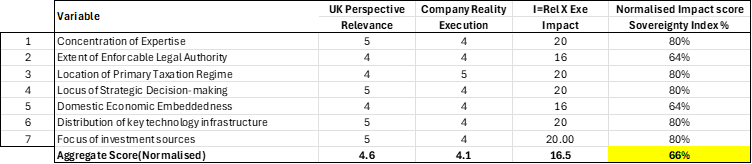
Figure 1: ARM TSI before SoftBank Acquisition
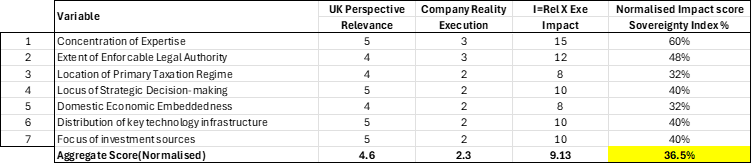
Figure 2: ARM TSI after SoftBank Acquisition
The Model in Action (2):
Detailed Assessment of DeepMind before and after latest changes
Although it is instructive to apply the TSI model to ARM, which has a long-established pedigree, it is very instructive to apply the same approach to a leading UK player operating in the AI Technology Stack, to explore how ‘subtle’ changes in ownership and control can have a measurable impact on the UK’s strategic position.
The Tables below show that the TSI value for DeepMind dropped from 34% to 17% following the recent changes in leadership, where Demis Hassabis has moved to a non-executive role.
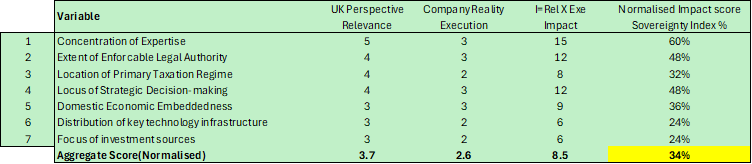
Figure 3: DeepMind as an ‘independent’ player in the Google family
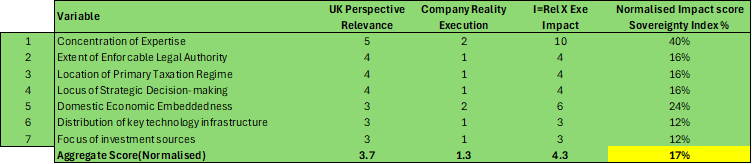
Figure 4: DeepMind integrated into the Google stable, following change in founder’s role
The Model in Action (3):
Comparison of Overall TSI Values for Companies of interest for UK AI Policy
While the changes in the TSI position at a leading UK-centric AI Technology Stack player are instructive, we also wanted to understand differences in behaviour between AI Tech Companies and companies focused on specific market spaces, where there might be greater opportunities for UK players to compete based on the incorporation of domain expertise, particularly reflecting hybrid technologies.
The Table below compares TSI values for UK players in the AI Tech Stack and four different market spaces: Lifesciences & Healthcare; Defence & Security; Energy & Transportation; Media & Entertainment.
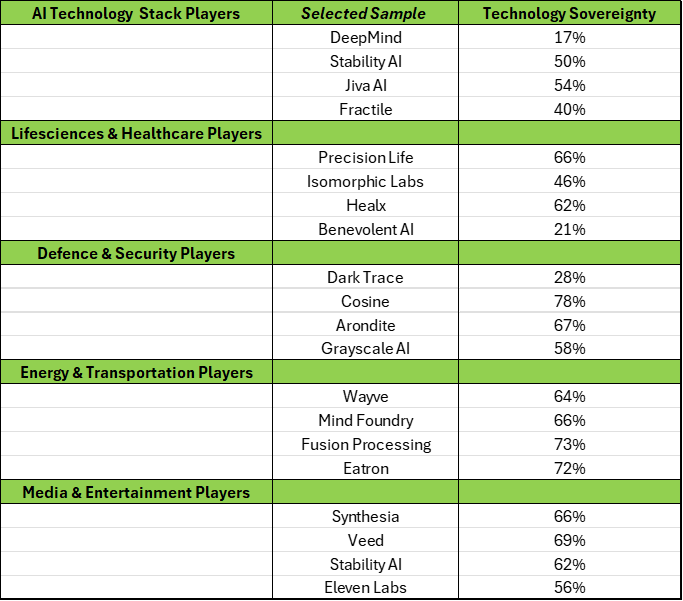
Figure 5: TSI as a function of AI Technology Stack and Key Market Spaces
While the companies chosen for this preliminary analysis are only intended to be illustrative, they do suggest some key patterns:
- The UK has the potential to build much stronger AI companies when they focus on specific market spaces, where there is a stronger emphasis on hybrid technologies and the associated data sets
- The UK has a bigger challenge in competing in ‘horizontal’ AI tech stacks, given the twin challenges of market size and the quantum of funding required